
Authors: Holly Kreider & Jennifer McCray1
At NAFSCE’s Center for Family Math (the Center), we aim to instill a love of math in students through the love of their families. As one step toward this goal, we see our familymath.org website as an opportunity to amass high-quality practice resources from across the field that help equip practitioners and families with the knowledge, skills, and dispositions to engage families in children’s math learning.
In the creation of a clearinghouse of practice resources for Family Math, we were particularly concerned with curating and sharing resources that not only reflected principles of high-quality math learning, but also the priorities of parents and caregivers themselves. This is a key tenet of NAFSCE’s values – to center families in everything that we do and to encourage others to do the same. Below we share our process for and insights from centering families in the development of our curated online library of Family Math resources.
One Resource, Many Voices
The Family Math Toolbox is a recently completed online searchable library of resources for practitioners and families featured on the Center’s familymath.org website.
Like everything we do, the creation of an online library of searchable practice resources in Family Math arose through collaboration. The Toolbox is the culmination of joint effort among Center staff, our communications consultant Hairpin, our leading math partner at the Erikson Institute, and our 9-member Family Math Parent Advisory Council (the PAC). Members of the PAC come from different backgrounds and regions of the U.S., but all share in common their roles as parents, grandparents and caregivers; their wisdom as parent leaders in their communities and nationally; and their commitment to Family Math and the Center’s success. In fact, many PAC members have served as Family Math advisors since 2016, helping to inform the establishment of the Center itself.
Our Review Process
Step 1. Establishing Priorities. As a first step in our co-curation process, we collaboratively developed two sets of guidelines for reviewing Family Math resources, one reflecting the Family Math priorities of parents and caregivers, and another reflecting the perspective of math education subject matter experts. Although both sets of guidelines include some similar categories (i.e., inclusive, accessible, and engaging), their definitions vary based on parent and math educator perspectives, so we chose not to merge them.
Table I summarizes the priorities generated by our Parent Advisory Council to guide our review of resources.
| Table I. Parent Advisory Council PrioritiesFor Reviewing Family Math Resources |
| Inclusive – Representing Black and Brown communities and other underrepresented groups (e.g. incarcerated parents, neurodivergent children) – Translated into multiple languages – Parent and family leaders helped design the resource(s) |
| Accessible – Free or affordable – Able to use everyday available items for math activities – Not too wordy, not too long – Easy to download and copy |
| Engaging – Photos and videos with real families – Interactive elements – Eye catching and colorful |
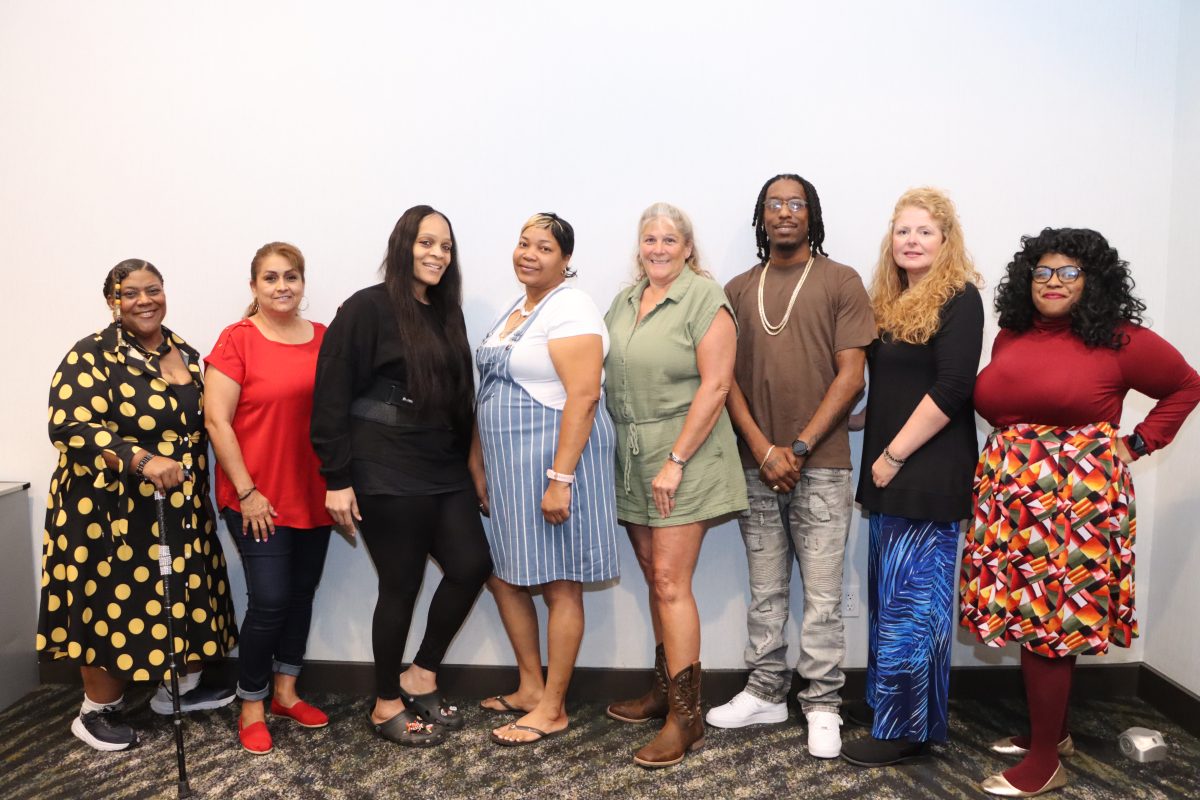
Table II details the math-focused priorities of our lead partner–the Early Math Collaborative at the Erikson Institute– with additional feedback from Chris Wright, founder of Early Family Math, and a member of the Center’s Family Math Steering Committee.
| Table II. Math-specific Priorities For Reviewing Family Math Resources |
| Quality Learning Process – Developmentally appropriate for recommended age – Opportunities for productive struggle and problem-solving – Math experiences as social opportunities – Not timed experiences – Include games and puzzles, not just activities |
| Breadth and Quality of Math Content – Accurate, clear, and effective representation of math concepts – A broad range of math topics (not just number and operations) – Applying math to real-world problems |
| Inclusive – Activities that can be adapted by developmental level, former math experience and knowledge, and motor, auditory and visual ability/disability – Address cultural relevance and language access |
| Engaging – Minimal use of worksheets and solitary experiences – Emphasize joyful experiences that can foster a love of math in children and their caregivers – Not too lengthy – Electronic apps when developmentally appropriate, encouraging shared activity, creating accessibility, not too much screen time on apps or videos |
| Accessible – Freely available resources – Don’t assume access to standard educational objects (storybooks, blocks) |
Step 2. Rating the Resources. For the PAC’s review and rating of the resources, we developed a spreadsheet with a 5-point Likert scale for each PAC priority for each resource (with 1=very poor, 5=excellent). We then dedicated most of a 2-hour quarterly meeting to break into smaller groups and review a subset of the 34 resources we were considering. Each breakout group also had a Center staff person to keep time, take notes, and provide Spanish translation as needed. We scheduled a second meeting to review most of the remaining resources and emailed the spreadsheet with links to PAC members for review of a handful of remaining resources. The Early Math Collaborative team also reviewed the resources using the math-specific priorities, with two team members reviewing each resource and then assigning an average score.
Step 3. Finalizing the Curated Library. Based on PAC and Erikson Institute ratings, we chose to include only those resources that earned at least an “average” cumulative rating (8 out of 12) from both our math experts and our parent leaders. In other words, we tried to select resources that most reflected alignment with multiple priorities and perspectives. Based on PAC reviews, we dropped 12 of the 34 resources, for a total of 22 final curated resources. Erikson Institute ratings were markedly different, with average or higher ratings for all but one of the candidate resources (a resource that received a higher rating from the PAC).
Note that we consider the curated library a work in progress, one in which we will annually review and add new (or previously declined) resources, and one for which we will continuously strengthen our review process.
Key Takeaways
- Listen to parents and caregivers. It changes what gets shared with the world. This was our first experience vetting an entire collection of potential resources by our parent leaders. The candidate resources were identified by staff, nonprofit education leaders, and researchers who make up our inner network. Although almost all of the candidate resources passed muster with our math education subject matter experts, more than one-third did not rate highly with our parent leaders. Without review by our parent leaders, we might have inadvertently created a resource collection that disengaged the very constituency at the heart of our Center’s mission.
- Attend to first impressions. Within the first few minutes of reviewing a resource, our parent leaders often felt an instant sense of connection or exclusion. For example, an authentic photo or video (even if not professionally done), often felt more engaging and inclusive than a stock photo or animated figure in a given resource. Paying attention to initial impressions can really matter.
- Give parents ample time and multiple opportunities to review resources. Our PAC initially agreed to review resources in small groups, to be efficient with our time, but also be able to discuss ratings with others. In a subsequent meeting, some parents expressed a desire to discuss each resource as a larger group, and/or to review resources offline at their own convenience and pace. We ultimately did a combination of all three. We come away with a better appreciation for having parents construct their own process, for flexibility, and for sensitivity to time constraints and the desire to work together.
- Engage families from start to finish. We believe that engaging parents and caregivers can and should start much earlier than the point of curation, but rather at the point of conception, design, and development. At a minimum, ask yourself: will the resource we’re contemplating be inclusive, accessible, and engaging to parents and caregivers? Even better, ask parents and caregivers directly if the idea has merit from their point of view. Likewise, parents and caregivers are among the most credible messengers in the field of family engagement, especially to audiences of other families, and are key to successful dissemination efforts. For example, our PAC leaders have enlivened and authenticated what’s on the page, including the PAC-authored resource MakeItMath, by disseminating this resource through conference workshops and webinars to parents/caregivers, parent leaders, and educators with very positive reception (see this blog post for one example).
As we like to say at the Center for Family Math, together we are greater than the sum of our parts. Parents and caregivers are a huge part of that equation. Let’s all strive to uphold that formula in all that we do, including curation of future resources for the family engagement field.
- The Center for Family Math’s Parent Advisory Council (PAC) were also invited to review this blog and provide feedback prior to its posting. PAC members include: Toyin Anderson, Lilia Becerril, DéJon Banks, Rosazlia Grillier, Sonja Lennox, Sara Morrison, Alecia Murray, Ariel DeNay Rainey, and Shereese Rhodes. ↩︎


