
Chelsea Fay, STEM Education Specialist, Maine Mathematics and Science Alliance
What if some of the best opportunities for math learning were already waiting just outside the door?
Many families look for ways to keep math skills strong over the summer. Supporting math learning doesn’t require special materials or structured lessons. While access to outdoor spaces varies from a balcony to a neighborhood sidewalk, park, backyard, or riverbank, rich math conversations can happen through noticing, wondering, and exploring outdoors. Outdoor math learning invites children and caregivers to count, compare, estimate, measure, and problem-solve together, shifting math from something abstract to something they naturally use to make sense of the world around them.
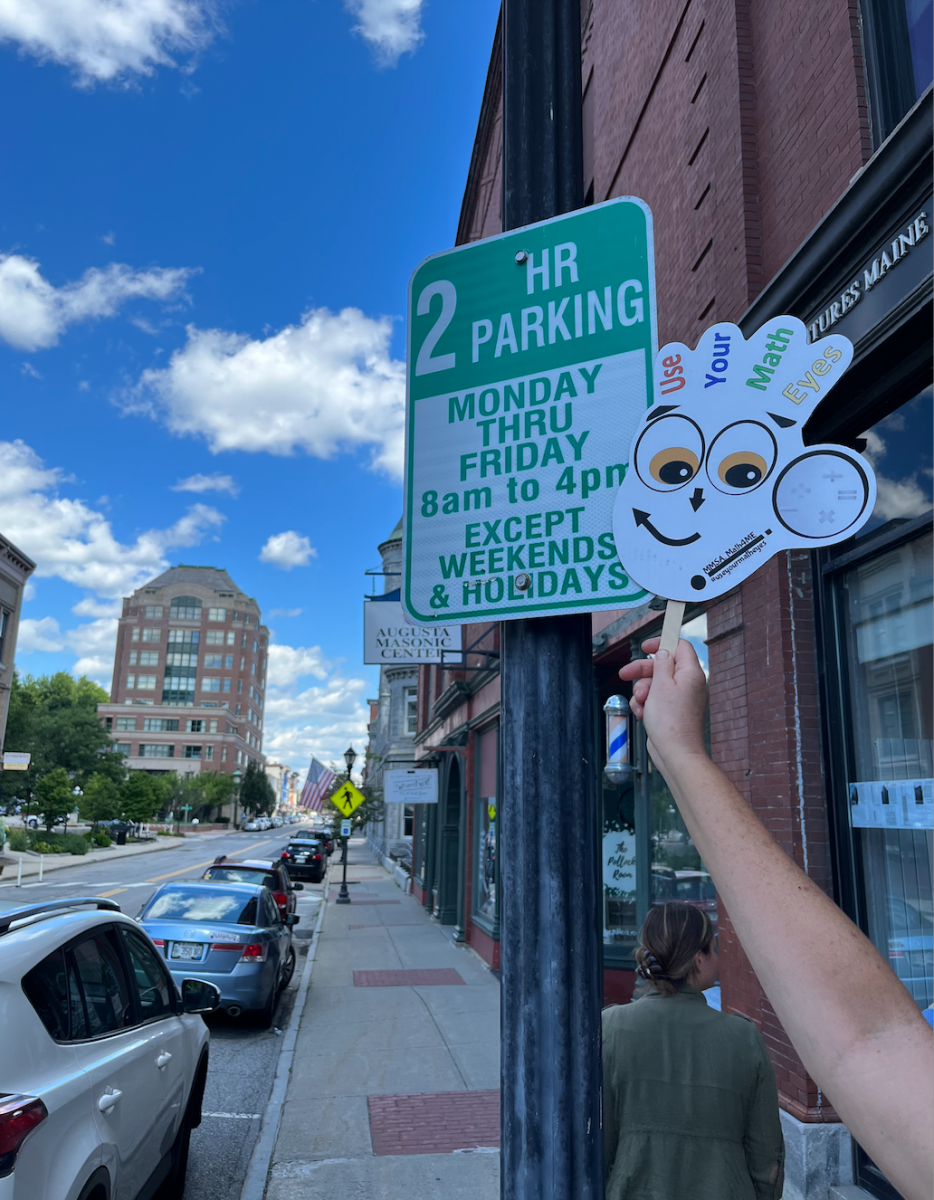
Our mascot UYME reminds us that math is all around us, when you “Use Your Math Eyes”
Consider Nature as a Tool for Mathematical Thinking
Sometimes, it’s enough to simply take math outside. Children and adults spend much of their day indoors, and even just moving familiar math activities outdoors can shift energy and engagement. Outdoor spaces naturally invite conversation, curiosity and movement. Nature also offers endless free math manipulatives. Rocks, sticks, leaves, pinecones, shells, and petals can all become tools for mathematical thinking. Instead of relying only on paper and pencil, children can build and represent ideas physically. Families might:
- Create and solve story problems outdoors
- Use sidewalk chalk for number lines or equations
- Bring math books or family games outside
- Build and compare shapes with sticks
- Sort leaves by size, color, or type
- Create repeating patterns with natural materials
- Use pinecones to explore grouping and multiplication
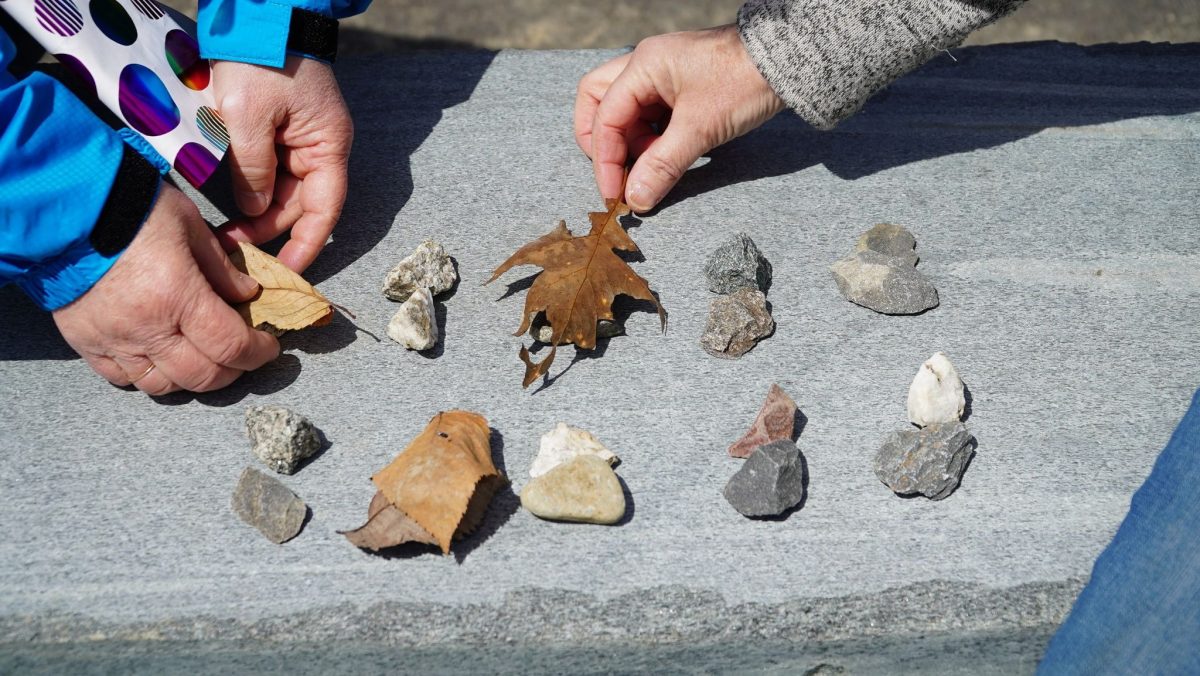
A teacher uses leaves to cover three groups of 2 rocks to help model algebraic concepts.
Find the Math Already Living in Nature
Nature is full of mathematical patterns and relationships waiting to be noticed. Families might:
- Look for symmetry in leaves, angles in branches, or geometric patterns in spider webs
- Compare plant growth in different conditions
- Estimate and measure rainfall, distances, or heights
- Count bird sightings
- Notice and graph seasonal changes over time
- Map favorite outdoor spaces
These experiences build observation skills and help children develop their curiosity about patterns and relationships.
Use Math to Investigate Real Outdoor Questions
Some of the most powerful outdoor math learning happens when children use math to explore questions in their own environment. You might be surprised at how quickly a child’s wonderings can snowball into a fantastically math-rich investigation when you intentionally listen. You might hear things like:
- Where did the puddle in the driveway go?
- Why do shadows change length throughout the day?
- Why is one tree so much larger than the others? And just how big is it? And how old do you think that makes it?
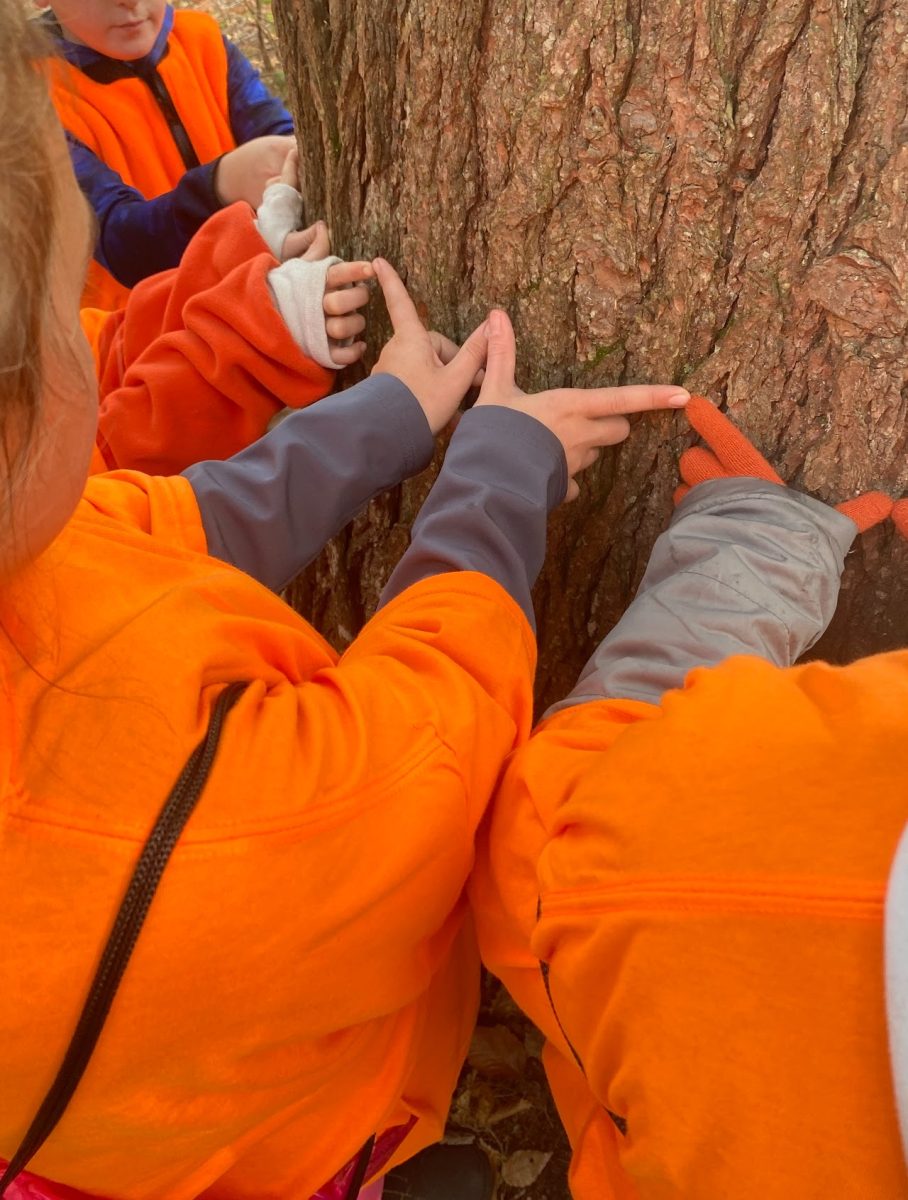
4th graders at Meroby Elementary School use their hands to determine the circumference of a tree.
Exploring these questions shows math as a tool for describing and understanding the world. These everyday experiences help children see math as useful, connected, and all around them. Resources, such as SMORs (Science & Math Outdoors) from Teach ME Outside, offer examples of this kind of learning, connecting math, science, and local outdoor exploration through real-world phenomena.
Helping Families See Themselves as Math Partners
Numeracy in Nature, a project developed by the Maine Mathematics and Science Alliance, has highlighted that math learning does not need to stay confined to desks and worksheets. Whether children are counting rocks, measuring puddles, or exploring local environmental questions, outdoor experiences can make mathematics feel more engaging, joyful, and relevant. And perhaps just as importantly, they help children and adults spend more time noticing the world together. Families looking for more easy outdoor math activities can find a collection of ideas in these printable half-page cards.


