

As part of their Doing the Math with Families initiative, TERC partnered with families and paraeducators to create short, practical videos that help caregivers explore math concepts through everyday activities and games at home. The videos are designed to make math feel joyful, accessible, and approachable for the whole family.
Explore the video playlist below before diving into our full conversation with Audrey Martínez-Gudapakkam and Sabrina De Los Santos Rodríguez.
The Center for Family Math recently sat down with Audrey Martínez-Gudapakkam and Sabrina De Los Santos Rodríguez from TERC, a nonprofit math and science education organization based in Cambridge, Massachusetts, to learn more about their work and impact on a variety of projects including: Aprendiendo, the Paraeducator and Parent Partnership Project, Doing the Math with Paraeducators and most recently, Doing the Math with Families.
Doing the Math with Paraeducators, funded by the National Science Foundation, strengthens professional development for paraeducators by building school-based learning communities, fostering collaboration with teachers and math facilitators, and including PreK educators. Doing the Math with Families is an adaptation of the former project, combined with earlier projects engaging families. It involves teaching parents or family caregivers how to play math games with their children through a workshop and short videos.
Center for Family Math: Across the projects you’ve worked on, what problems of practice were you trying to address and how did you approach it? What felt missing or underserved in existing family math approaches?

Audrey: I think both as a parent myself and as a former teacher, I’ve always been really frustrated by how families and parents are not included, valued, or seen as authentic partners in educating children. I truly believe it takes a whole village to raise a child, and we should all be working together. It’s really hard to witness how many times children are falling through the cracks.
I’ve done home visits and seen how disempowered parents can feel about their own ability to educate their children. I’ve witnessed parents who were afraid to speak to their children in their native language because they thought it would hurt their child’s success in school. At the same time, I’ve also seen children succeed despite the odds because they have an empowered parent or family caregiver advocating for them.
That’s actually what got me very interested in math. I realized math is one of those things where there are no language barriers. Everybody does math in everyday life. All parents – even those with less than a third-grade education – can support their children in preparing for school and practicing the skills they need. But it becomes really disempowering when parents try to help and then teachers tell them they’re doing it all wrong and not helping their child.
We’re using very different math curricula, tools, and strategies – many of which we didn’t grow up with ourselves. Family caregivers, community members, everyone, should be educated about these new tools, strategies, and ways of thinking about math. At the same time, we need teachers to recognize that math goes beyond the worksheet. It’s present in what parents are already doing in everyday life with their children.
Right now, it feels like a vicious cycle of traumatizing generations. First, people have negative experiences with math themselves. Then, as parents, they try to help and are told they’re doing it wrong, which retraumatizes them. We have to undo that.
Especially now, when education budgets are being cut and there are teacher shortages, if we can see parents or family caregivers as a powerful asset, we can begin to correct this. And there’s also the joy. When we work with adults and parents and get them laughing, enjoying math, and even describing it as magical, it changes things. When they experience that joy, they’re much more likely to bring it to their own children. And as we know, math attitudes are contagious.

Sabrina: Adding to that, one of the main things we noticed was the disconnect between families and schools, especially in math education. Math tends to be a subject that creates a lot of fear and anxiety. Even though we recognize how important it is, families are often left feeling lost. Their children come home with homework they don’t understand, and they think, “I have no idea how to help my child with this.”
That lack of communication and understanding between families and schools really caught our attention. We started asking: How can families feel more empowered to support their children, whether that’s helping with homework or communicating with teachers in ways that feel comfortable and confident?
We also began thinking about paraeducators. In both the research and our interviews, many paraeducators shared that they’re in the classroom, but don’t feel they’re being used in meaningful ways. They might assist with behavior management or sit in the back of the room, but they’re not always positioned as instructional partners who can truly support students or families.
Many of these paraeducators come from the same communities as the students. They feel a deep connection to them, and students often see them as role models – people they identify with. We realized that paraeducators play a very essential role. Yet even when they’re asked to support math instruction, they often don’t receive professional development in math. Providing math-focused professional development workshops for paraeducators felt like an important step that could help create a bridge between families and schools.
This really connects back to that broader disconnect we saw, especially during the pandemic, when families suddenly had to support their children at home and, in many ways, become their primary teachers. We also conducted a survey and found that most of the paraeducators in our project were parents in Boston Public Schools. It’s the same community. And even when they’re not parents, they’re aunts or grandmothers. They’re deeply embedded in students’ lives.
Maggie: This is all so powerful. What are you most proud of in your work?
Audrey: I think both Sabrina and I feel really grateful because we’ve learned so much from our mentors – Judy Storeygard, Connie Henry, and other staff at TERC who have worked on Investigations, like Marlene Kliman. By learning from them, we’ve been able to help both parents and paraeducators laugh, feel joyful, and feel empowered to support their children’s math learning, in their everyday lives, even though many of them are living under very stressful circumstances. Most of the parents and paraeducators we work with come from really challenging situations.
Most recently, we’ve been doing a parent workshop with a community organization in Boston. Witnessing the awe on parents’ faces when they realized how to use the number line was incredibly powerful. One parent said “It was like therapy…I laughed a lot…and it was really educational.” Another person said, “If we see math as a game, we discover the magic, and it’s easier to do.” That meant a lot to us. If we can help adults have fun with math, it’s much more likely they’ll bring that same joy to their children.
Sabrina: It’s been so inspiring to hear from the parents and the paraeducators. Our team always talks about the community that’s been created with these families and paraeducators, who often come from different schools and are meeting for the first time at these workshops.
They’re engaging in experiences that many of them say they never imagined for themselves. A lot of them have shared, “I never imagined myself doing math, much less teaching math to children.” The connections they’ve built with one another and with us have been powerful. They’ve felt comfortable sharing their traumatic past experiences with math and talking about how they now feel more confident. Many have said they feel it’s possible for them to continue learning and growing stronger in math to support their children.
We’ve seen paraeducators go on to earn certificates and degrees, become leaders and mentors, and even work toward becoming teachers. We’ve also seen parents step into leadership. For example, after a summer workshop, many parents joined us again in January to serve as mentors for a new group of parents at another organization.
There was one moment that really stood out to me. We were playing a math game and working together to teach a new parent. One of the mentor parents corrected me and said, “Oh no, we do it this way.” I remember thinking, this is incredible, you’ve become an expert at this in such a short amount of time. So seeing them take ownership of the learning, watching them feel confident and comfortable teaching other families, is powerful.
We’ve also heard many meaningful reflections:
- One paraeducator expressed, “For me, the rewarding [part] of this has been being able to engage the children better, asking more and learning how to be more strategic with the questions that we ask. Now I am understanding the curriculum a little better.”
- One parent commented about the videos we created for families to watch at home, how the videos showed that with just the things you already have at home, you can do math activities yourself. She said, “It’s easy because it shows that you can use anything, it just requires you to think.”
Center for Family Math: This is a perfect segue, actually, to the next question. Each of your initiatives takes a strong co-design approach, where families and paraeducators themselves help develop, implement, and lead the projects. Why is this important? How did you make co-design happen?
Audrey: Sabrina and I both strongly believe that parents and paraeducators are the experts on the children and families they work with. They know what makes their children feel joyful, comfortable, and empowered. They are deeply invested in seeing their children succeed.
Although we may bring expertise about math strategies, activities, games, and tools, they know what’s going to work best for their families and children. They also know how to communicate and translate those ideas to other families. That’s why we learned so much when we developed the videos with the paraeducators. Many of them are parents from the same communities, and they gave us really helpful advice about the language to use so the videos wouldn’t come across as overly academic or complicated.
We would teach them a game, they would take it home and try it with a child, then bring it back. We would edit the footage to highlight the mathematical moments and then show it to them for feedback. Often, they would suggest things like using the words “your child” to make it more relevant, slowing down subtitles that were moving too fast, reducing the amount of text, adding a slide at the beginning to set expectations, or ending the video with a high-five to give it closure. Small details like that, they knew better than we did.
That’s also why it’s important to us to compensate both paraeducators and parents. They are sharing their knowledge with us. And we’ve found they are the most effective at training the next group of parents and paraeducators because they can speak from their own lived experience and inspire others.
Sabrina: Going back to the idea of ownership, whenever participants – parents, paraeducators, anyone involved – feel like this is truly their project, it changes everything. We wanted them involved from the very beginning.
At every point, we asked: Is this valuable for you? Is this accessible for your families? Is this working? Instead of developing the videos ourselves, we invited the paraeducators to create them. We might suggest a topic like counting and share ideas from the workshops, but they were the ones producing the videos.
We were constantly going back and forth, editing, showing them revisions, hearing them say, “I don’t like this,” or “This would work better.” They would share the videos with families, and families would try the activities at home, create their own videos, or send photos. Many times, they came back with creative adaptations: “We tried it this way, and it worked even better,” or “My child loved this version of the game.”
When people feel like this is truly their project, they take ownership. But that takes time. It can be intimidating for families, especially if they’re used to being told what to do: “Here’s the homework,” or “Here’s the activity.” It takes time for them to feel comfortable saying, “Yes, I’m part of this, and I can give honest feedback.”
That’s why we build in constant check-ins. After every workshop, we use a short feedback survey asking what they learned, what questions they still have, what they want to explore next, and what could be different. We do this weekly, or whenever we host workshops, and we gather feedback on materials as well. As projects progress, we see people becoming more comfortable sharing openly. By the end, we often hear things like, “Thank you for letting us design this with you, instead of just giving us something that might not work.”
Maggie: What feels especially unique is the way data has been such a central part of every project you’ve done. Because you’ve embedded data collection throughout, you’ve been able to generate some really meaningful findings and outcomes. Beyond the anecdotes you’ve shared, how did families’ and paraeducators’ understanding of math evolve over the course of the project? And how has your own understanding of math changed?
Audrey: One of the major shifts we’ve seen since starting this work comes through the feedback we get from parents. They begin to realize math is everywhere and anywhere. They start to see that math can be taught through play, not just through worksheets. They recognize they don’t need special, expensive materials or books to support math learning. They can do it through everyday activities – during meals, at bedtime, on walks, or while doing chores.
At first I was focused mainly on helping families build awareness that math happens everywhere. But over time, I realized how important it is to help them see that math can also be joyful. That insight came from years of working with families and understanding how busy and stressed many of them are working multiple jobs and getting very little sleep. I noticed that the only events families consistently made time for were the ones that were fun for the whole family. They might skip other school meetings, but if something was joyful and engaging, they showed up. That’s when I really understood how powerful games are.
Another big takeaway from our research with paraeducators was the shift in how they saw themselves in relation to math. Many began with very negative experiences of learning math,and then this shifted when they became involved in teaching math. Stepping into a teaching role allowed them to relearn math in a joyful way and develop more agency. They want to make sure their students don’t have the same negative experiences they had.
Sabrina: Another shift we saw was in how people understood the nature of math itself. Instead of seeing math as completing a worksheet and getting the right answer, families and paraeducators began to understand that mistakes are part of learning. It became okay for a parent or paraeducator to make a mistake and use it as an opportunity to learn alongside the child. If we counted wrong, we’d count together. There was a playfulness in trying again and even laughing at mistakes.
For me personally, I grew up feeling like math had to be done in one specific, structured way, and that it had to be correct. So understanding that there are multiple ways to approach a problem was transformative. We heard parents say things like, “I learned there are many ways to form numbers,” or “There isn’t just one logical order – there are different paths to the same result.” That flexibility seemed to reduce their fear and anxiety around math. As they became more open and confident in math, we hope that mindset also transfers to other areas of learning.
Center for Family Math: We are very interested in the idea of persistence in math. What you’ve described – this openness to mistakes, the shift in questioning, the playfulness – really captures the spirit of what we mean by persistence. What strategies have you embedded in your work that have helped families and paraeducators develop that mindset?
Sabrina: When we were meeting with families and facilitating workshops, there was a lot of intentional repetition. We kept returning to a small set of essential questions. No matter the activity, we emphasized things like: How do you know? Can you show me? Those questions became anchors – prompts for when families or parareducators felt stuck. It gave them a way to work through challenges together instead of shutting down.
Audrey: We also heard a lot about past trauma with math. Many said, “I’m not a math person,” or “I’ve never been good at this.” But they also expressed a strong desire for their children to have a different experience. That motivation to break the cycle really inspired persistence. Even when they wanted to give up, seeing their own children or students make progress encouraged them to keep going and to look for ways to make math more accessible and more joyful.
For example, this happened when we were teaching about the number line. We might start with something like the “number of the day” and ask participants to think of all the different ways to make 12 – through addition, subtraction, division, and so on. At first, we model multiple approaches so they can see there isn’t just one correct path. Realizing there are many ways to reach the same answer opens up space for persistence. Often, people shut down because they believe there’s only one way to solve a problem, and if they don’t know it, they’re stuck.
Showing different ways of knowing helps people see that math isn’t just memorization. It’s about reasoning. When participants realize they have tools to think with, and ways to check their thinking, they don’t have to rely solely on memory. That shift builds confidence and supports persistence.
Center for Family Math: I’m also curious about your use of epistemic network analysis. Could you explain that aspect of the work and how it helped you better understand what was happening?
Audrey: We realized early on that traditional surveys and structured interviews don’t always work well with the families and paraeducators we partner with. Many are immigrants or English learners, and in their lived experience, being fully honest in formal settings can feel risky. So sometimes they tell you what they think you want to hear.
I’ve seen this firsthand. When you know families well, you realize how much of their real story doesn’t show up in a survey response. That’s why we developed Math Journeys. We invite paraeducators to visually represent their past experiences with math, through drawings, symbols, speech bubbles, whatever feels authentic. Then they share their story in a small group. They control what they say. They own their narrative.
We record those presentations, transcribe and code them, and then analyze them using Epistemic Network Analysis, or ENA. ENA is a tool for quantitative ethnography. It allows us to map the relationships between ideas in coded data. Instead of just counting themes, it shows how concepts connect to one another. Thicker lines represent stronger connections. And what’s powerful is that you can click on a connection and see the actual quotes behind it.
In our project, we used ENA to compare paraeducators’ attitudes toward math before and after participating in the professional development (PD). The difference network showed a statistically significant shift. Before the PD, the strongest connections were between negative attitudes and learning math. Many described math as hard, discouraging, or confusing.
After the PD, the strongest connections shifted to teaching math and positive feelings. When paraeducators talked about teaching, they described feeling more confident and comfortable. So it wasn’t just that attitudes improved, it was specifically through stepping into the role of teacher that we saw growth.
We were also able to look at individual cases. For example, one paraeducator, Beatriz, showed a large shift both in her ENA network and in her pre–post self-efficacy survey. Before the PD, her language was closely tied to negative learning experiences. Afterward, her network showed strong connections between teaching and confidence. Seeing both the statistical shift and her actual words gave us much greater confidence in what was happening (See Table 1).
Table 1. How Beatriz gained confidence in teaching mathematics before and after professional development.
Sabrina:In many research projects, qualitative and quantitative data are analyzed separately. You might show survey graphs with significant results and then add quotes that seem to support them. That strengthens validity, but it can still feel disconnected.
With ENA, the story feels integrated. You can see the structure of the relationships between ideas before and after and you can click directly into the qualitative data that created those connections. It helps us understand not just whether there was a shift, but how and why it happened.
And what we consistently saw, both at the group level and individually, was that when paraeducators moved into the role of teacher or mentor, their confidence grew. Teaching gave them agency. For many, it was transformative. They were no longer just talking about difficult math experiences, they were describing themselves as capable teachers of math.
Maggie: What would you recommend to a school, district, or organization that wants to start something like this? Earlier, you mentioned that it needs to be fun and engaging for the whole family. If others were hoping to build on your work, what should they keep in mind? What lessons feel most essential? What should they hold onto tightly as they begin?
Sabrina: One of our goals has always been to help families truly own this work – to mentor other families and sustain the momentum themselves. We want to reach a wider network of families and paraeducators and find ways for them to continue supporting one another, spreading both the math gains and the joy they’ve experienced over the years.
Although we can continue offering workshops, we’re also thinking about more sustainable models like developing an online toolkit or partnering with organizations that already have strong family engagement systems in place. We did that with St. Stephen’s in Boston, which already had a parent mentoring program and strong connections to Boston Public Schools. Math wasn’t necessarily a focus, but we were able to integrate our work into an existing structure.
So we’re thinking creatively about partnerships, funding, and ways to embed this work within organizations that already have relationships and trust. In our January workshops, parents were asking, “Please come back. Don’t let this be the last session.” That tells us something important. Even when the progress feels incremental, we’ve seen real shifts. Families come back with stories about their children feeling more confident in math class, or about continuing to play math games together at home. That impact motivates us to keep expanding the work.
Audrey: At the same time, especially in this moment of budget cuts and teacher shortages, I think schools and districts urgently need to recognize parents and paraeducators as resources to invest in. Parents want their children to succeed. Paraeducators, many of whom have been in the same schools for 15 or 20 years, are often the most stable members of the school community. Teachers and leaders may move on after a few years, but parents and paraeducators remain.
If we train and empower parents and paraeducators to understand and use math tools, strategies, and curriculum, they can become powerful advocates and instructional partners. Many of them may have had limited educational opportunities or literacy challenges, so we can’t expect them to learn in the same way as someone who has completed four years of college. That’s why engaging them through interactive games, reflective discussions, role-playing, and audiovisual tools like videos is so effective.
Paraeducators bring tremendous expertise. They are uniquely positioned to build bridges between schools and families. Paraeducators often share cultural backgrounds, community ties, and even family relationships with students. Students spend significant time with them, during arrival, dismissal, and lunch, and see them as role models. If we treat paraeducators as professionals, compensate them fairly, and elevate their leadership, we send a powerful message to students about their own potential as learners.
Another key takeaway is that just as the U.S. has successfully made literacy a joyful bedtime routine for families, we can do the same with math through games. All families, regardless of language or educational background, can engage in playful math experiences that build skills. Math can become part of daily family life.
For me, the central lesson is this: schools and districts must recognize parents and paraeducators as assets, not afterthoughts. They are not going away. They are deeply invested. With the right tools and support, they can transform math learning for children and for themselves.
Please view the collection of videos, Doing Math with your children at home, here.
To learn more about this work read more here:
De Los Santos Rodríguez, S., Martínez-Gudapakkam, A., & Storeygard, J. (2021). Empowering Latinx Families to Help Children with Mathematics, Mathematics Teacher: Learning and Teaching PK-12, 114(10), 776-780.
Martínez-Gudapakkam, A., De los Santos, S., Storeygard, J., Patrone, A., Cuevas, D., & Chingo, P.(2023). Empowering Latinx Families with Math. In M. Strutchens, G. Krause, D.Y. White, & J. Bay-Williams (Eds.), Antiracist Mathematics Education: Stories of Acknowledgment, Action and Accountability (pp.89 chapter 7). Amazon Publishing Agency.
You can learn more about Epistemic Network Analysis here and here.

Audrey Martínez-Gudapakkam, Ed.M. is a senior researcher at TERC with 18 years of experience in STEM education research and evaluation in public schools, community-based organizations, and universities. She also works with English for New Bostonians as a Family Specialist to support English classes at various Boston Public schools that educate parents on how to navigate and support their children’s learning.
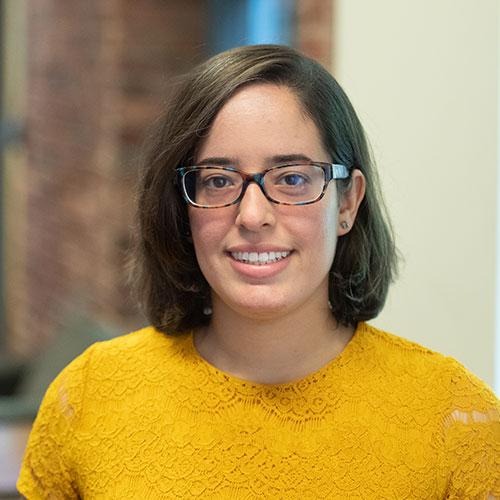
Sabrina De Los Santos Rodríguez, Ed.M., is a STEM Research Associate at TERC. She draws on her background in psychology, public health and education technology to design, research and evaluate learning experiences in both formal and informal environments. She works closely with teachers, paraeducators, students and families in programs that range from early childhood to adult education.


