
As a school psychologist and qualitative researcher, I’ve always been drawn to opportunities to deepen my understanding of the experiences and needs of the students, families, and educators who I work with. As a co-founder of Family Engagement Lab, a nonprofit focused on meaningfully supporting family engagement in learning, I’ve found that deep listening and learning isn’t just informative, it is essential in order to ensure that our solutions are relevant, effective, and meaningful for the people who will use them.
At Family Engagement Lab, co-design sessions with families and teachers have shaped our programs and services since our founding. Co-design is a term used to describe a process in which partners such as families, schools, and communities join together to actively create products, services, and solutions that meet the needs and preferences of those who will be most affected by them. As the Family Engagement Core Competencies illustrate, this collaborative approach runs counter to uni-directional approaches to family engagement where ideas are simply transmitted from the school to home.
For example, when Family Engagement Lab first began, families shared with us a desire for regular communication from their child’s teacher about: 1) what their child is learning, 2) whether their child is on track academically, and 3) how they can help support their child’s learning at home. As a result, FASTalk was designed to help teachers send engaging, home learning activities via text messages in each family’s home language that directly relate to classroom learning. Additionally, we designed FASTalk to be a light lift for teachers after hearing that lack of time is a key barrier for teachers. FASTalk’s learning activities are written by subject matter experts, professionally translated into each family’s home language, and scheduled in advance to save teachers time while ensuring families receive consistent information.

Our Cycle of Learning: Applying Co-design Approaches to the Development of New Content
Co-design with families and educators is a central tenet of how we operate today. As we expand the grade levels, subject areas, and curricula that FASTalk supports and aligns to, we know how critical it is for our decision making to be informed and driven by the teachers and families who will use our resources. For example, as we extend FASTalk’s content library to include out-of-school math resources for middle school families, we have engaged in cycles of learning to ensure that our approach meets their specific needs.
Phase 1: Listening to Families’ Hopes and Dreams
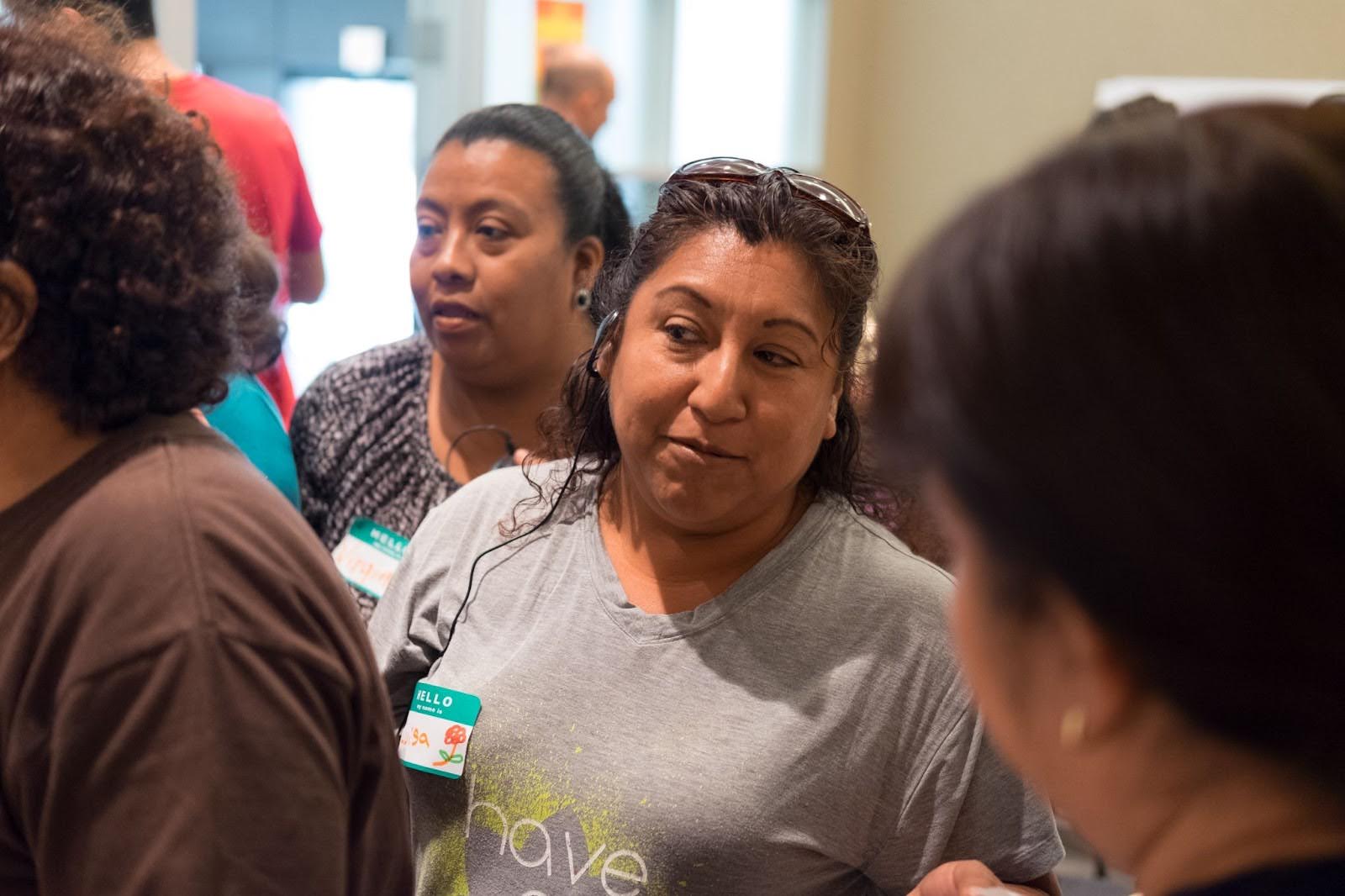
To understand from families what they needed to support their children in middle school mathematics, we held focus group sessions with families from rural Louisiana to urban Los Angeles. Families shared the ways home-school communication had changed as their children transitioned from elementary school to middle school. They know less about what their child is learning and how they can and should help. The flow of information had changed as their children transitioned to having more teachers – and teachers who had many more students. Further, middle school academic content had become less accessible as it became more complex.
When we specifically talked about math, families had strong feelings. “Kids aren’t learning math the way we learned it.” And families weren’t confident in their ability to support math learning at home. “I don’t feel like I can help my child with the math they are learning.” Families also shared negative experiences with their own math learning in school. They never saw themself as a “math person” then, and they don’t consider themselves one now. Teachers had picked up on these feelings and many decided that the best path forward was not to communicate regularly with families about middle school math.
When we talked more about the middle school concepts that students were learning in class (things like equivalent ratios, proportional relationships with fractions, and linear functions) and shared text message-length tips and activities related to these concepts, families were anxious. And we know that parents with math anxiety are more likely to have children with math anxiety which can negatively affect students’ performance in math. We realized that leading with math concepts would not be the most welcoming way to invite families into supporting their child’s learning.

Phase 2: Designing New Content
We decided to shift our approach to our middle school content from mathematics-specific material to a focus on positive math mindsets and problem solving strategies – critical skills that significantly support students’ math learning. Indeed, students’ mindsets towards math have been shown to influence their academic behavior and consequent academic performance. With a growth mindset, students believe that their skills and abilities grow with their effort. When faced with a challenge, they are more willing to persevere and work harder, believing that their effort will help them overcome barriers. What if middle school families received FASTalk tips and strategies that focused on supporting their children’s positive math mindsets? Families were interested.
Phase 3: Testing and Refining the New Content
In order to understand which messages might be most beneficial, we developed mindset-focused FASTalk messages and asked for input from families. Messages such as:
Did you know a parent’s view of math affects how their child feels about it? When parents are positive and curious about math, kids feel more confident and motivated to learn.
Helping your child see how math is connected to everyday life can make it more relevant and engaging. Point out real-life situations where math is used, such as cooking or budgeting.
The way that you talk to your child about learning can shape their own beliefs and mindsets. Foster a growth mindset in math by praising and complimenting your child’s efforts this week!
In focus groups, families shared that they felt capable and confident – the messages resonated and were useful. Teachers were also encouraged by the exploration of new ways to engage and partner with middle school families around mathematics.
Conclusion
Designing ‘with’ instead of ‘for’ families meaningfully shifted our approach. We didn’t lead with specific mathematical concepts – an approach we take often in elementary school. We decided to start by highlighting the powerful role that middle school families can and DO play in supporting math learning in their everyday lives. Families provide new opportunities for children to practice and engage with mathematics, layering on personally meaningful connections to out-of-school learning experiences, and connecting math to aspects of their children’s interests, and future goals. Centering families’ needs and experiences through co-design helps ensure solutions are both accessible and effective in helping families play their critically impactful role in promoting positive learning outcomes for their children.
About the Author
Dr. Elisabeth O’Bryon is the chief impact officer and co-founder of Family Engagement Lab (FEL), a national nonprofit and leader in the advancement of learning-centered family engagement serving PreK-12 school systems. Prior to launching FEL, Elisabeth served as the Director of Research and Evaluation at GreatSchools, and a Postdoctoral Research Associate at the Yale Center for Emotional Intelligence where she contributed to the development and evaluation of school-based social and emotional learning programming for children, teachers, and families. Elisabeth has a doctorate in psychology and experience providing school psychological services to preschool through high school-age students in both English and Spanish.
This blog is part of a new article series designed to look at the Family Engagement Core Competencies in action. To read more about this work or share your own ideas, visit: www.nafsce.org/edprep


