
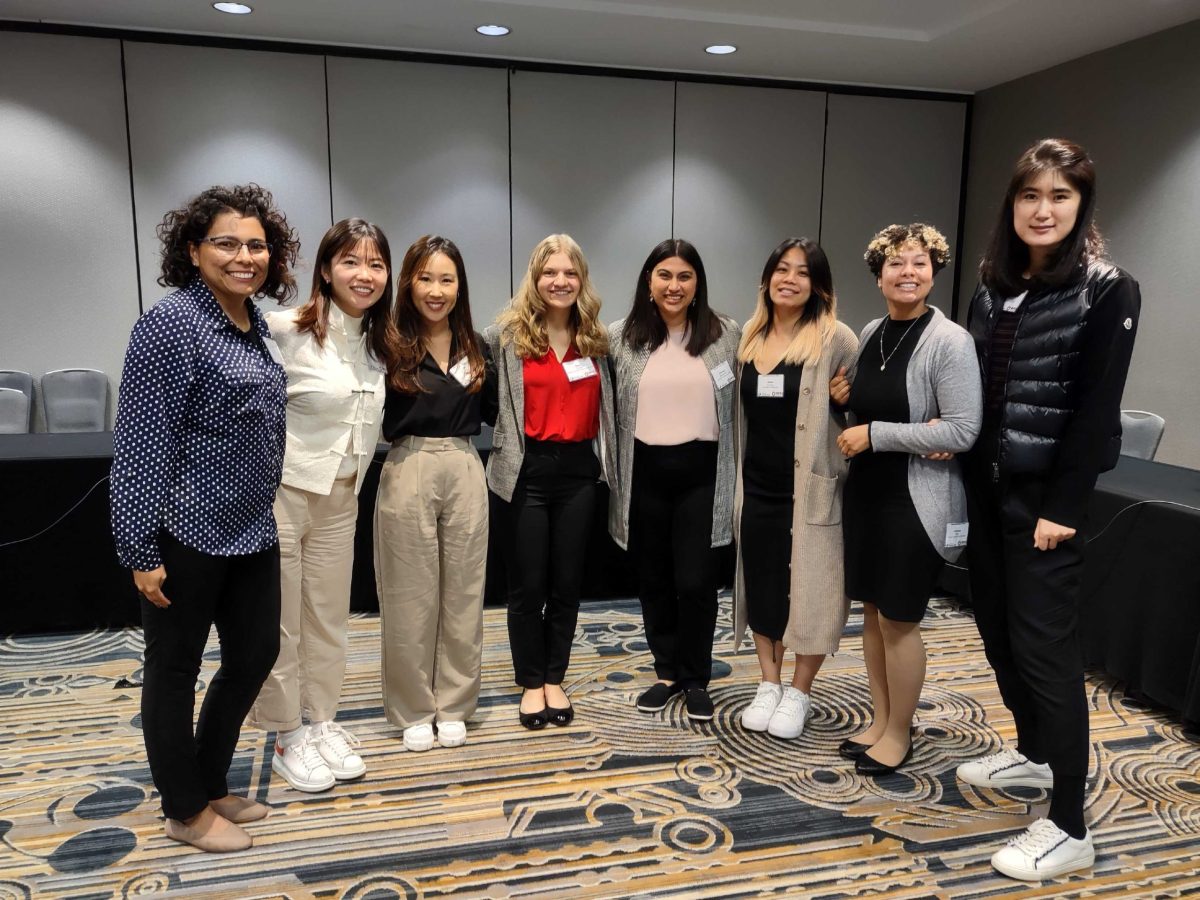


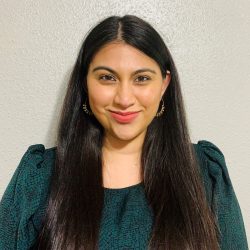
 Vanessa Noemy Bermudez, University of California, Irvine
Vanessa Noemy Bermudez is a doctoral candidate at the University of California Irvine School of Education. She earned an M.A. in Experimental Psychology from San Jose State University and a B.S. in Psychology from Duke University. Her research aims to harness the funds of knowledge within Latine, immigrant, and low-income communities, to enhance family engagement and forge strong home-school connections that foster early STEM learning. Adopting community-based design research methods, she collaborates with families and teachers to co-create meaningful and playful environments that are grounded in Latine families’ cultural ways of knowing and aligned with early STEM learning goals. Combining quantitative and qualitative methodologies, she investigates the causal impacts of these programs on STEM learning and motivation outcomes, seeking to gain deeper insights into families’ experiences and inform future design and implementation cycles. As a first-generation college student of Mexican heritage, she is particularly dedicated to the mentorship of students, especially those from underrepresented backgrounds.
Research Brief: Matemáticas en Familia: Co-Designing Home Math Activities with Latine Families
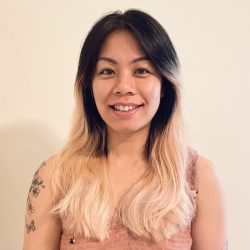 Shirley Duong, University of Pittsburgh
Shirley Duong is a PhD candidate in the Cognitive Psychology program at the University of Pittsburgh (Pitt). She completed her BA in psychology with a minor in mathematics at the University of New Haven and her MS in psychology at Pitt. Her research interests include identifying qualitative aspects of the home learning environment (HLE) that relate to children’s math skills, exploring innovative methods to measure the HLE, and applying HLE research to support early education in her community. In addition, Shirley is a Data Analyst at Trying Together, a non-profit organization that supports high quality care and education for children in her county. In her spare time, she enjoys drawing, baking, and playing chess.
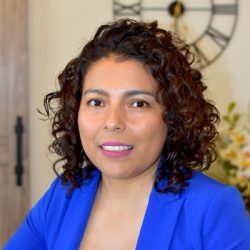 Fany Salazar, University of Arizona
Fany Salazar is a PhD candidate at the Department of Teaching, Learning, and Sociocultural Studies at the University of Arizona. She is interested in working and doing research with parents from Latinx communities. Her research focuses on parents’ participation and engagement in the mathematics education of their children. Also, she is interested in how parents as adult learners use their experiences to make sense of mathematics. Currently, she is working on a project with teachers, multilingual children in grades 2-5 from Latinx communities, and their parents.
Research Brief: Parental Engagement in Mathematics from the Perspective of Mexican American Mothers
 Gillian Grose, University of Maryland, College Park
Gillian is a fourth-year doctoral student studying Human Development at the University of Maryland, College Park. She received her B.S. in Human Development from Cornell University. She studies how parents’ and children’s beliefs about math can impact children’s math learning. Overall, she is interested in intervention work that aims to make math more accessible. Her research focuses on how children can learn math through playful, informal learning activities.
 LaTreese VeNaye Hall, Florida International University
LaTreese Hall is a doctoral candidate in Developmental Science at Florida International University under the mentorship of Dr. Shannon Pruden. She has completed a B.S. in Psychology, an M.A. in Interdisciplinary Studies, and an M.S. in Psychology. Hall’s research explores how family processes impact children’s number and spatial language input. Specifically, her dissertation examines (1) the extent to which parents’ social behaviors (e.g., praises and negations) and mental rotation skills are associated with the number and spatial language they produce with their children, and (2) whether mothers of children with behavioral challenges produce a higher quantity of math language after receiving an intervention shown to improve the family social context. Hall advocates for the inclusion of underrepresented populations in research and investigates her study questions with Hispanic and bilingual families. Hall hopes to extend her dissertation work to examine family processes, socioemotional development, and math achievement among parents and children nationally and internationally.
Research Brief: The Links Between Parental Social Behaviors and Math Talk with Young Children
 Julie Joohyun Kim, Boston College
Julie Kim is a doctoral candidate in the Applied Developmental and Educational Psychology program at Boston College, where she works with Dr. Eric Dearing. Julie’s dissertation aims to examine a strengths-based approach in home-school collaboration to foster early math learning. Her dissertation lies at the intersection of her research interests in early math development and in translating research to practice in an applied setting (i.e., home, preschool classroom). By helping teachers recognize families as valuable partners, and by helping families recognize their strengths and ability to foster math in their daily routines and practices, she hopes her work will inform research and practice efforts to support children’s early math learning.
Research Brief: Home-School Collaboration to Support Children’s Early Math Learning
 Linxi Lu, Boston College
Linxi Lu is a Ph.D. candidate in Applied Developmental and Educational Psychology at Boston College. Her research interests revolve around understanding various factors that might impact family engagement and children’s early math development. She has conducted research in a variety of contexts, including low-income communities in rural & urban China and the United States. Her work has been published in journals such as Developmental Psychology and Education Sciences. Apart from her scholarly endeavors, she actively contributes to the field as a practitioner. She designs and implements culturally-adaptive family intervention and preschool programs in various settings. Moreover, she serves as a co-founder of Parent Matters: the Growing Star Program, a summer camp initiative aimed at promoting parent-child interactions. She also serves as an online lecturer, public speaker, and writer, sharing her expertise on parent-child interactions and family engagement via various Chinese platforms such as BRTV, JSTV, ZJTV, Tiktok, etc.
 Qianru (Tiffany) Yang, Harvard Graduate School of Education
Qianru (Tiffany) Yang is a PhD candidate in the Human Development, Learning and Teaching program at the Harvard Graduate School of Education. Her research focuses on early STEM learning in the home environment, with a particular focus on the role of parent-child interaction in the development of early STEM skills. Tiffany is also interested in how culture influences parental STEM-related beliefs and practices, as well as children’s learning outcomes. Her dissertation project examines families of 4- and 5-year-olds in China and the United States to understand cultural similarities and differences in parental math beliefs and attitudes, parent-child math communications during play, and their relations to children’s early numerical and spatial skills.


